

Field Trips
Conference Field Trips
Below is an overview of the three field trips on offer at the upcoming NZCS Conference 2026. Registrants are welcome to select one option which is included in your full conference registration ticket*.
*These are limited spaces and subject to availability at the time of registering.
(Photos: DunedinNZ)
Field Trips Overview
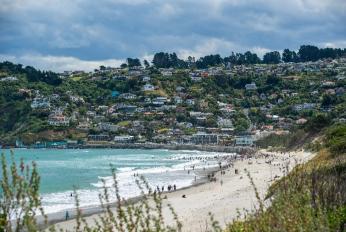
Field Trip 1: Coastal Resilience - Southern Coast
The South Coast Field Trip focuses on coastal resilience, including coastal hazard monitoring, engineering interventions, nature-based solutions and community-led initiatives. The trip begins at St Clair–St Kilda Beach, where a narrow dune system helps protect South Dunedin from coastal inundation and contains one of New Zealand’s largest coastal landfills. Participants will observe how hard and soft engineering approaches influence erosion and accretion patterns. The route then follows the scenic coastal road via Lawyers Head to Brighton to examine coastal erosion and a community-led project supporting dune stabilisation and the restoration of a natural creek. Weather and time permitting, the trip may also include coastal planting.
- Key stops: Tūhura Otago Museum → St Clair–St Kilda Beach → Lawyers Head → Brighton → Tūhura Otago Museum
- Focus: Coastal hazard monitoring, engineering interventions, nature-based solutions, community-led initiatives and coastal resilience
- Activity: Coastal planting (weather permitting)
- Meet: 8.30–9.00am at Tūhura Otago Museum
- Return: Approximately 1.00–1.30pm at Tūhura Otago Museum
- Good to know: Expect time outdoors and walking over coastal terrain. Bring a hat, sunscreen, water, sturdy footwear, a rain jacket and clothing suitable for fieldwork and changeable weather.
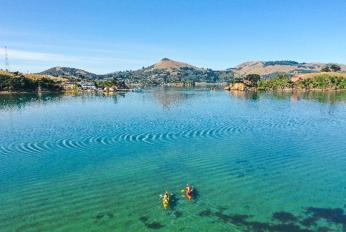
Field Trip 2: Coastal Ecology - Southern Peninsula
Explore the coastal biodiversity and history of the Otago Peninsula. At the Royal Albatross Centre, participants will learn about the area’s natural history, including terrestrial and marine protection, pest eradication and the restoration of native species, alongside the site’s social and military history. The second stop includes a guided tour of the New Zealand Marine Studies Centre and the University of Otago’s Portobello Marine Laboratory, offering an insight into current marine research and education programmes and the chance to get up close with local coastal marine species.
- Key stops: Tūhura Otago Museum → Royal Albatross Centre → Taiaroa Head/historic fort area → Marine Studies Centre → Tūhura Otago Museum
- Focus: Coastal ecology, albatross conservation, marine reserve context and local ecological or ranger insight, subject to host confirmation
- Meet: 9.00am for a 9.30am departure from Tūhura Otago Museum
- Return: Approximately 1.30pm
- Capacity: Maximum 30 delegate registrations
- Good to know: The experience includes walking and exposed outdoor areas. Wear shoes suitable for walking, warm clothing and a rain jacket.
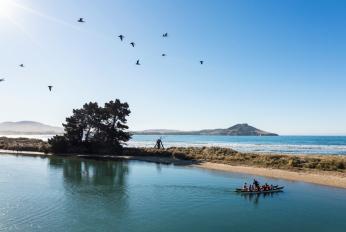
Field Trip 3: Estuarine System Management & Rock Coast - Northern Coast
Travel north to examine how estuaries, catchments and exposed rock coasts are understood and managed. At Warrington and Blueskin Bay, the group will consider beach build-up, sediment movement, dredging material, planting and kai moana values. The Karitāne/Puketeraki stop will bring in local histories, mahi and estuary or catchment work. If time allows, the route may continue to Shag Point for an additional look at rock-coast processes and erosion.
- Key stops: Tūhura Otago Museum → Warrington/Blueskin Bay → Karitāne/Puketeraki → Shag Point, if time allows → Tūhura Otago Museum
- Focus: Estuarine systems, local histories, sediment and catchment management, planting, kai moana values and rock-coast erosion
- Meet: 9.00am for a 9.30am departure from Tūhura Otago Museum
- Return: Approximately 2.00pm
- Good to know: The route includes several outdoor stops and may change to suit weather, access and available time. Wear sturdy footwear and bring layers, sun protection, water and a snack